
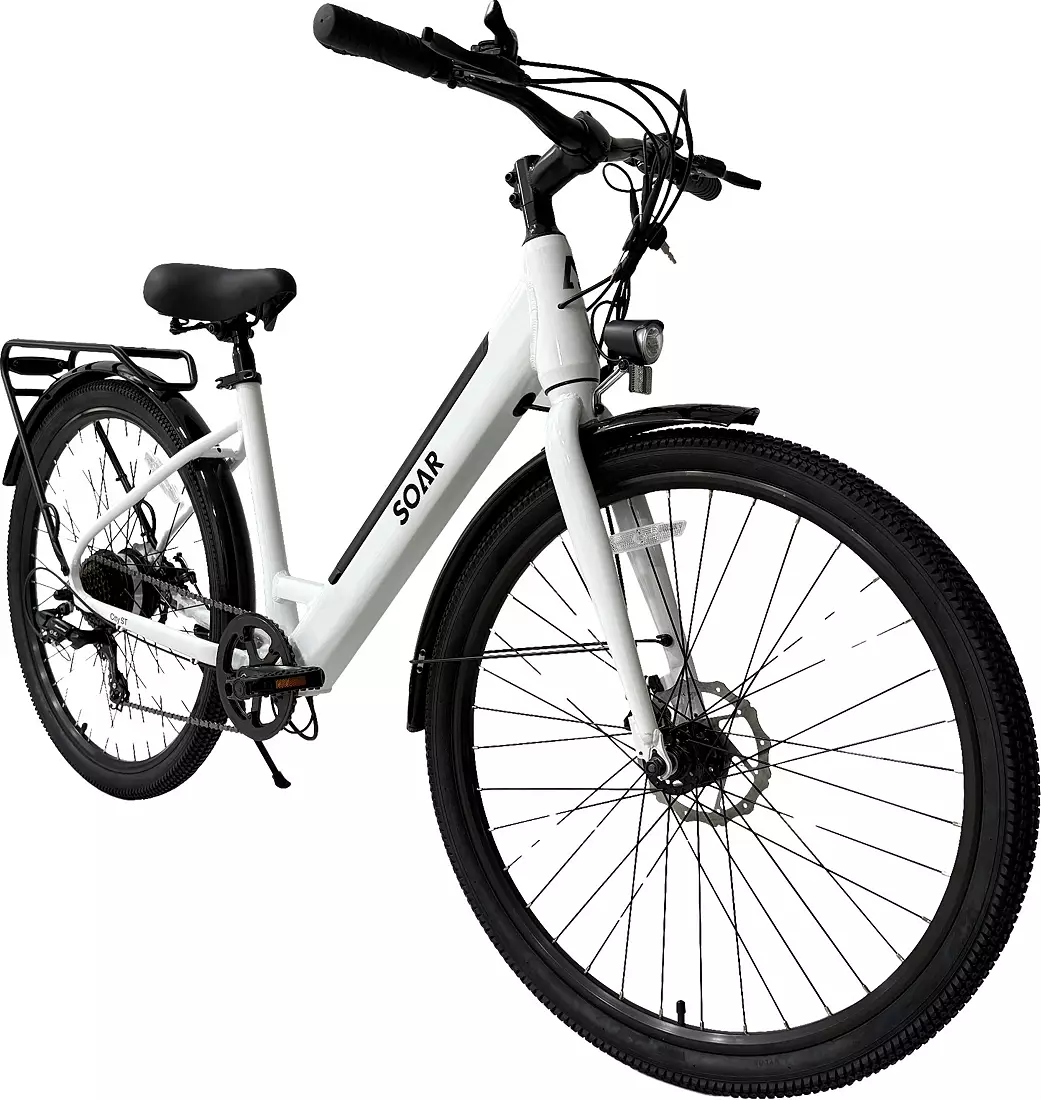
Soar Adult 27.5″ City ST Electric Hybrid Bike
- FEATURES:
- Powerful Motor: 350W motor for smooth acceleration and assistance
- Maximum Speed: Reaches up to 20 mph, ideal for city commuting and weekend adventures
- Durable Frame: Constructed from lightweight Soar 6061 grade aluminum for enhanced maneuverability
- Low Step-Over Design: Easy mounting and dismounting, making it accessible for riders of all ages
- Comfortable Tires: Equipped with 27.5-inch by 2.0-inch tires for stability and comfort on varied terrains
- Robust Battery: 36V 10.4AH Lithium battery providing a maximum range of 20 miles, perfect for daily commutes
- 7-Speed Transmission: Allows for easy adjustments to different terrains and riding conditions
- Reliable Braking: Front and rear stainless steel disc brakes for dependable stopping power
- LED Display: Intuitive display to monitor speed, battery level, distance traveled, and more at a glance
- Spacious rear rack for carrying groceries or gear
- Full fenders to keep you clean and dry
- Built-in LED lights for safety in low-light conditions
- Adjustable Comfort: 350mm seatpost length for personalized seating height and comfort
- Quality Components: Premium Shimano parts for enhanced performance and reliability
- Safety Assurance: UL certified testing and product inspections for quality and safety
- Brand : SOAR
- Country of Origin : Imported
$799.99
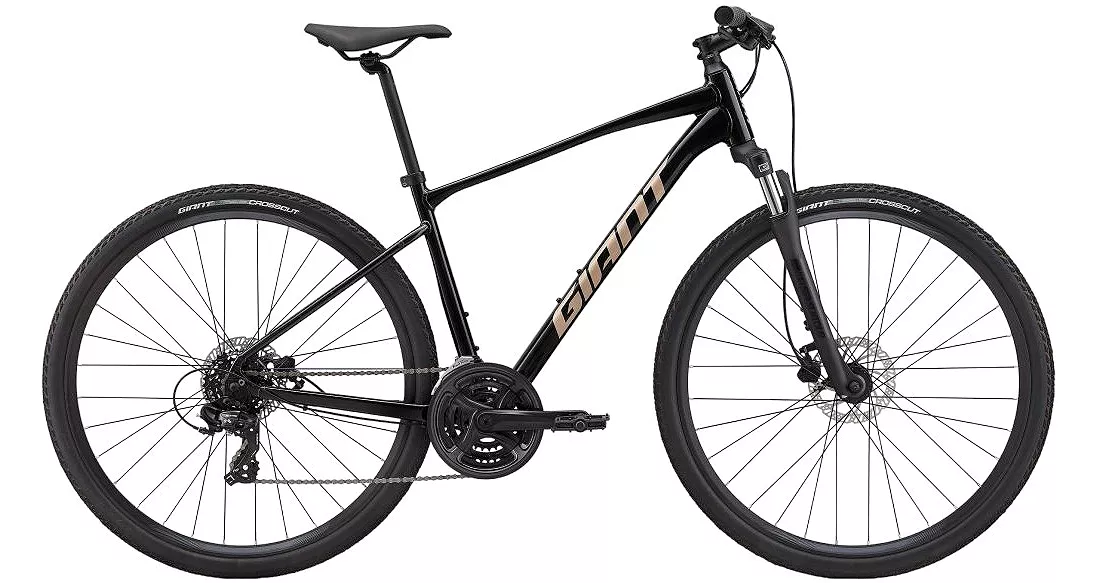
Giant Adult 700C Roam Disc 4 Hybrid Bike
- Features:
- Lightweight and durable ALUXX aluminum frame features 6061 alloy with single-butted tubes to produce strong and durable framesets
- Updated flat-bar frame geometry allows the rider to balance efficiency with stability
- Mechanical disc brakes give you added control on rugged roads and dirt
- D-Fuse seatpost and suspension fork absorb road shocks and vibrations
- Compatible with rear racks, allowing for easy cargo capacity
$700.00
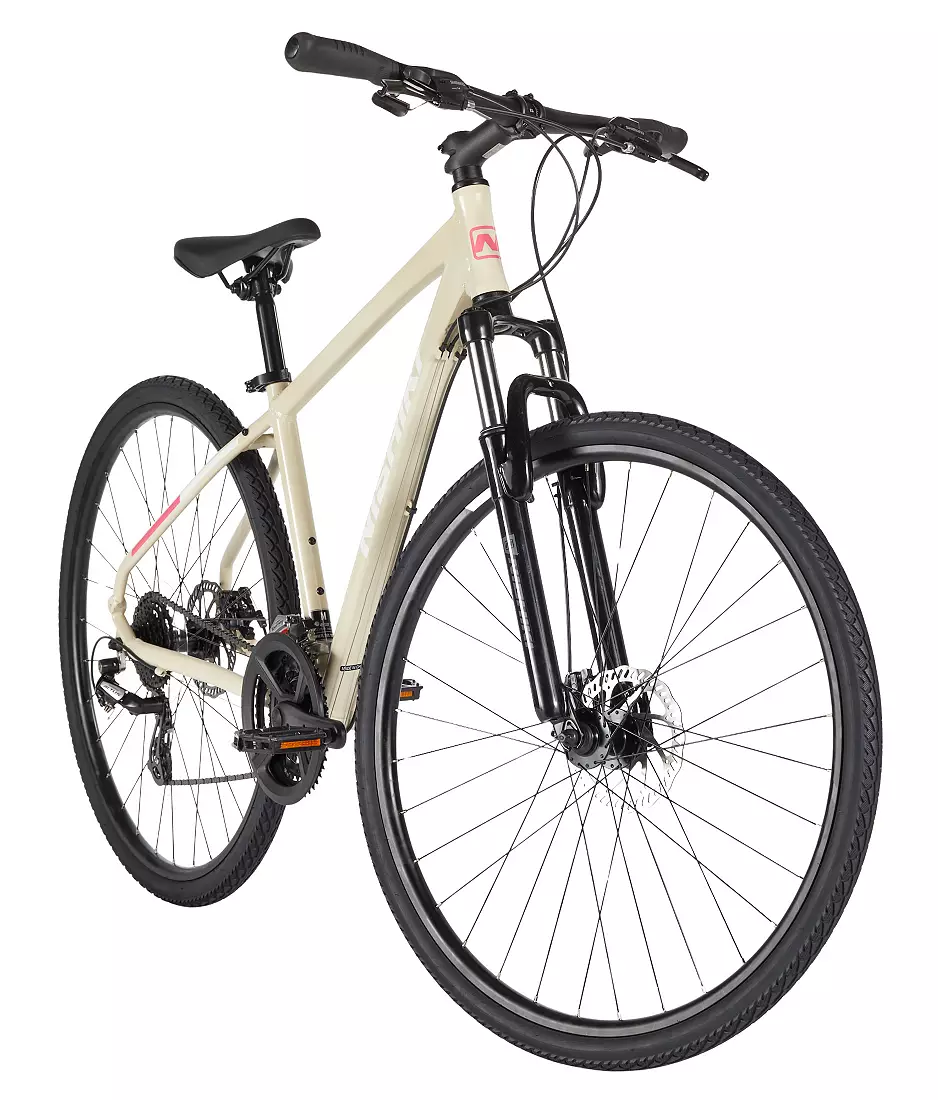
Nishiki Women’s 700c Pagosa Sport Hybrid Bike
- Features:
- Hybrid bike capable of both path and pavement rides
- Lightweight 6061 aluminum frame with internal cables, double water bottle mounts, tapered head tube, rear rack mounts and replaceable derailleur hanger
- Nishiki Suspension fork with 80mm travel
- Shimano Altus 11-32T, 3 x 8 speed drivetrain
- Shimano EZ fire triggers provide simple up and down shifting at the press of a button
- Lightweight double wall aluminum rims with 700 x 40mm multi-pavement tires
- The reliable 700C wheels withstand terrain from rocky roads to smooth pavement, while the disc brakes deliver optimum stopping control
- Mechanical disc brakes provide reliable stopping power
- Bike weighs approximately 33 lbs.
$429.99
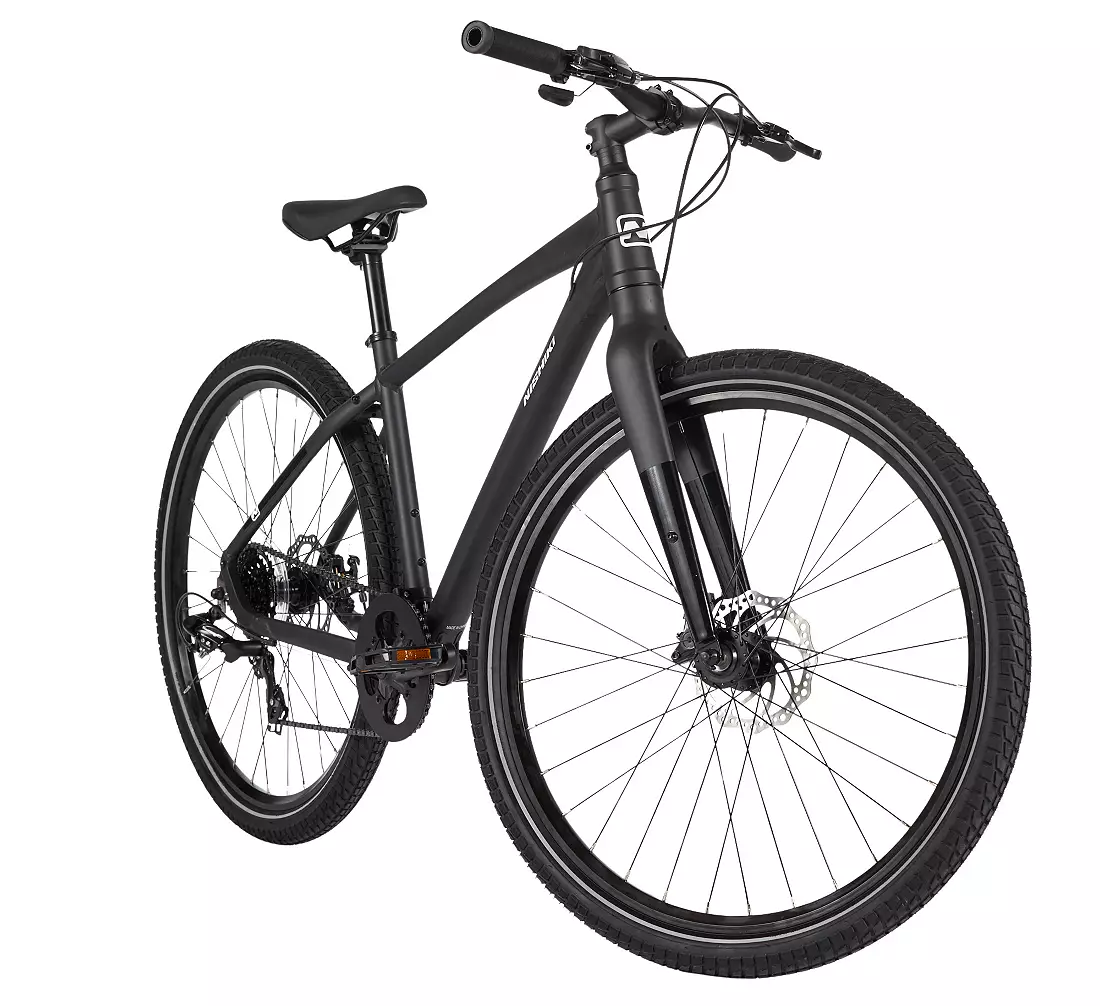
Nishiki Adult Cordova 27.5” Hybrid Bike
- Features:
- Hybrid commuter bike capable of road, path and pavement rides
- Lightweight 6061 aluminum frame with internal cables, double water bottle mounts, tapered head tube and replaceable derailleur hanger
- This lightweight frame is responsive to pedal and easy to carry up and down stairs
- This hybrid combines great comfort features with an upgraded road bike-style drivetrain that’s lighter and better geared for performance
- Lightweight 6061 aluminum urban fork
- Mechanical disc brakes for sure stopping power; thesebrakes perform well in any weather, let you slow down or stop faster, and require less effort to activate than rim brakes
- Shimano 12-32T, 1 x 8 speed drivetrain gearing makes it easy to ride on flat or hilly terrain
- Samox Forged, 42T crankset
- This bike upright geometry puts you in the perfect position to see the world around you
- Bike weighs approximately 33lbs
$599.99
How I Learned Everything About Choosing the Perfect Lightweight Hybrid for Your Adventures
I remember standing in my garage three years ago, staring at my bulky mountain bike with a mix of frustration and determination. The thing weighed a ton—or at least it felt that way every time I hauled it up the stairs to my apartment. I’d been commuting to work on it for months, watching sleeker, faster bikes zip past me on the bike path, and I knew something had to change. That’s when I stumbled down the rabbit hole of lightweight hybrid bikes, and let me tell you, it completely transformed not just my commute, but my entire relationship with cycling.
What started as a simple search for “lighter bike” turned into weeks of research, test rides, and conversations with everyone from seasoned cyclists to bike shop mechanics. I made mistakes, learned hard lessons, and eventually found my perfect ride. Now, I want to share everything I discovered with you, because choosing a lightweight hybrid bike doesn’t have to be as overwhelming as it initially seems.
What Exactly Makes a Lightweight Hybrid Bike Special?
Before I dive into the nitty-gritty details, let me explain what drew me to hybrid bikes in the first place. I wasn’t interested in hunching over drop handlebars on a pure road bike, nor did I need the aggressive suspension and knobby tires of a full mountain bike. I wanted something in between—something versatile, comfortable, and yes, lightweight.
A lightweight hybrid bike combines the best features of road and mountain bikes while keeping the weight down significantly. We’re talking bikes that typically weigh between 20 to 28 pounds, compared to traditional hybrids that can tip the scales at 30 pounds or more. That difference might not sound like much on paper, but trust me, you feel every single pound when you’re accelerating from a stoplight, climbing a hill, or carrying your bike up a flight of stairs.
The magic happens through careful material selection, smart component choices, and thoughtful design. My current ride weighs just 22 pounds, and the difference from my old mountain bike is night and day. I can lift it with one hand, accelerate faster, maintain higher speeds with less effort, and actually enjoy hills instead of dreading them.
The Best Lightweight Hybrid Bikes I’ve Encountered
During my search, I test-rode probably fifteen different bikes. Some were fantastic, others disappointing, and a few were absolute game-changers. Let me share the standouts I discovered.
The Cannondale Quick series consistently impressed me. These bikes have earned a reputation for being some of the lightest in the hybrid category, with the higher-end models featuring aluminum frames that feel incredibly responsive. When I first threw my leg over a Quick CX 2, I immediately noticed how nimble it felt compared to everything else I’d tried. The bike seemed eager to move, responding to the slightest pressure on the pedals.
Trek’s FX series also deserves serious consideration. I spent a memorable afternoon riding the FX 3 Disc along a riverside trail, and the combination of lightweight construction and smooth-rolling wheels made it feel like I was gliding rather than pedaling. Trek has really dialed in the geometry on these bikes to balance comfort with efficiency.
For those with deeper pockets, the Specialized Sirrus line represents the upper echelon of lightweight hybrids. I’ll be honest—I couldn’t justify the expense for my needs, but when I test-rode the Sirrus X 4.0, I understood why people rave about it. The carbon fork absorbed road vibrations beautifully, and the overall weight was impressively low for a bike with such capable components.
Giant’s Escape series offers excellent value in the lightweight hybrid category. The Escape 2 Disc I tried felt solid and well-built without the premium price tag of some competitors. It’s a bike I’d confidently recommend to someone just getting into cycling who wants quality without breaking the bank.
The lightest hybrid I’ve personally encountered was a Cannondale Quick Carbon, weighing in at just under 20 pounds. That bike felt almost supernatural—like it was reading my mind and responding before I even applied pressure. Of course, it also cost about as much as a decent used car, which puts it out of reach for most casual riders.
Let’s Talk Money: What Does a Lightweight Hybrid Bike Cost?
This is where things get real, and I learned some important lessons about balancing budget with quality. Lightweight hybrid bikes span an enormous price range, from around $500 to well over $3,000, and understanding what you get at each price point is crucial.
In the $500 to $800 range, you’ll find entry-level lightweight hybrids that make compromises to hit that price point. These bikes typically feature basic aluminum frames, mechanical disc brakes or rim brakes, and lower-tier component groups. I actually started here with a $650 bike, and while it served me well for six months, I eventually upgraded because I wanted better performance.
The sweet spot, in my experience, falls between $800 and $1,500. This is where you start getting quality aluminum frames with better tubing, hydraulic disc brakes, and more reliable drivetrain components. My current bike cost $1,200, and I feel like I got tremendous value. The components are durable, the ride quality is excellent, and I don’t feel like I’m missing out on anything I actually need.
Between $1,500 and $2,500, you enter premium territory. These bikes often feature carbon forks (sometimes full carbon frames), top-tier component groups, and weights that drop below 23 pounds. When I was shopping, I seriously considered a bike in this range, but ultimately decided the performance improvement didn’t justify the cost for my casual commuting and weekend rides.
Above $2,500, you’re looking at high-performance machines with carbon frames, ultra-light components, and features that appeal mainly to serious enthusiasts. These are beautiful bikes, but for most people (myself included), the law of diminishing returns kicks in hard at this level.
Understanding Frame Materials: The Foundation of Weight Savings
One of the most important things I learned during my research was how frame materials impact weight, ride quality, and price. Let me break down what I discovered about each option.
Aluminum alloy frames dominate the lightweight hybrid market, and for good reason. Modern aluminum tubing technology has advanced tremendously, allowing manufacturers to create frames that are both light and stiff. My bike has a 6061 aluminum frame with hydroformed tubes, which means the tubing is shaped to optimize strength while minimizing material use. The result is a frame that weighs around 3.5 pounds but still feels incredibly solid.
The beauty of aluminum is its efficiency. It transfers power well, meaning less of your pedaling energy is wasted in frame flex. However, aluminum can transmit road vibrations more directly than other materials, which is why many lightweight hybrids pair aluminum frames with carbon forks—the carbon absorbs some of that harshness.
Carbon fiber frames represent the pinnacle of lightweight construction. I’ve ridden several carbon-framed hybrids, and the combination of low weight and vibration damping is truly impressive. A quality carbon frame can weigh as little as 2 pounds while providing a smoother ride than aluminum. The catch? Cost. Carbon frames typically add $500 to $1,500 to a bike’s price compared to an equivalent aluminum model.
Carbon also requires more careful handling. While modern carbon is quite durable under normal use, it can crack if you crash or drop the bike in just the wrong way. I decided against carbon for my commuter bike because I lock it outside sometimes, and I didn’t want to worry about someone knocking it over.
Steel frames deserve mention, even though they’re less common in the lightweight category. Some boutique builders create beautiful steel hybrids using thin-walled tubing that can achieve respectable weights around 25-27 pounds. Steel offers unmatched durability and a supple ride quality that many cyclists love. I test-rode a custom steel hybrid that cost $2,800, and while it was gorgeous and rode like a dream, the weight penalty compared to aluminum made it impractical for my needs.
I should mention that titanium frames exist in the high-end hybrid world, offering the holy grail of light weight, durability, and ride quality. However, with prices starting around $3,000 just for the frame, titanium remained firmly in fantasy territory for me.
Is a Lightweight Hybrid Bike Good for Commuting?
This question is personal for me because commuting was my primary motivation for buying a lightweight hybrid bike, and I can answer with an emphatic yes—with some important caveats.
For my 7-mile urban commute, my lightweight hybrid is absolutely perfect. The reduced weight makes accelerating from stoplights effortless, which is crucial in city riding where you’re constantly starting and stopping. I can maintain a comfortable cruising speed of 16-18 mph on flat sections without feeling like I’m working hard, and when I hit the occasional hill, I barely have to shift down.
The upright riding position keeps me visible in traffic and lets me scan for hazards easily. The wider tires (I run 35mm) provide enough cushion to handle rough pavement and the occasional pothole without beating me up. And perhaps most importantly, the light weight makes carrying my bike up the stairs to my office a non-issue.
However, I learned that lightweight hybrid bikes have some limitations for commuting that you should consider. Most don’t have mounting points for fenders and racks, which was a problem until I found a bike with the necessary eyelets. I needed to add a rear rack for my pannier bag, and not all lightweight models can accommodate this.
Weather resistance is another consideration. My bike has hydraulic disc brakes, which work perfectly in rain, but some cheaper lightweight hybrids still use rim brakes that lose effectiveness when wet. If you commute year-round like I do, disc brakes are non-negotiable.
For longer commutes—say, 15 miles or more each way—a lightweight hybrid bike is still viable but might not be optimal. The efficiency is there, but the upright position creates more wind resistance than a road bike’s drop bars would. I have a colleague who commutes 18 miles on a lightweight hybrid and loves it, but another friend switched to a road bike for his 20-mile commute because the speed difference mattered to him.
Navigating Bike Sizing: Getting This Right Matters More Than You Think
I almost made a costly mistake when buying my first lightweight hybrid bike. I’m 5’10”, and I assumed I needed a large frame because that’s what most sizing charts suggested. Thankfully, the bike shop owner convinced me to actually test ride a medium, and the difference was revelatory.
Hybrid bike sizing is less critical than road bike sizing, but it still matters tremendously for comfort and control. Here’s what I learned: the right size lightweight hybrid bike should allow you to stand over the top tube with 1-2 inches of clearance, reach the handlebars comfortably without overstretching, and achieve a slight bend in your elbows when gripping the bars.
Most manufacturers size their bikes in small, medium, large, and extra-large, though some use numeric sizing (like 15″, 17″, 19″). The key is matching your height and inseam to the manufacturer’s specific sizing chart, because sizing varies between brands. A medium Trek might fit differently than a medium Cannondale.
I spent about thirty minutes on each test bike, riding around the neighborhood, hitting some hills, and really paying attention to how my body felt. On the large frame I initially considered, I felt stretched out and had to lean too far forward. The medium felt natural immediately—I could reach the bars comfortably, my leg extension was perfect, and I had better control in quick maneuvers.
For shorter riders (under 5’4″) or taller riders (over 6’2″), finding the right size can be more challenging. Some lightweight hybrid lines don’t offer XS or XXL sizes. If you fall outside the typical size range, you might need to look at specific brands that cater to your height, or consider a custom build.
Long-Distance Capability: Can You Tour on a Lightweight Hybrid?
I’ve taken my lightweight hybrid bike on several 50-mile recreational rides, and I’ve learned both its strengths and limitations for distance riding. The short answer is yes, you can absolutely ride long distances on a lightweight hybrid, but comfort becomes the deciding factor.
The efficiency of a lightweight frame means you’re not fighting the bike’s weight over those miles. I find I use less energy maintaining pace compared to heavier bikes I’ve ridden. The upright position, which I initially thought might be a disadvantage, actually helps on longer rides because it reduces pressure on my hands and wrists.
However, the geometry isn’t optimized for all-day riding like a touring bike would be. After about 30 miles, I start feeling it in my lower back because I’m more upright than I would be on a road bike with drop bars. I solved this partially by adjusting my saddle height and tilt, and by taking more frequent breaks to stretch.
The tire clearance on most lightweight hybrid bikes is another consideration for distance riding. My bike maxes out at 38mm tires, which is comfortable but not as cushy as the 42mm+ tires I’d want for a multi-day tour on mixed surfaces. For paved road centuries, this isn’t an issue. For gravel adventures, I’d want more tire volume.
I rode a 70-mile charity ride last summer on my lightweight hybrid, and while I finished strong, the dedicated road cyclists definitely had an advantage in terms of speed and efficiency. But here’s the thing—I was way more comfortable than the mountain bike riders who showed up, and I could keep pace with plenty of the entry-level road bikes.
Gearing Systems: What I Learned About Drivetrains
When I started shopping for a lightweight hybrid bike, I was overwhelmed by the variety of gearing options. Let me demystify this based on my experience.
Most lightweight hybrids come with gears—typically either 1x (single chainring) or 2x (double chainring) systems. The higher-end models often feature 1x drivetrains with 9-12 speeds in the rear cassette. My bike has a 1×11 setup, and I absolutely love the simplicity. There’s no front derailleur to adjust, no chain drop issues, and the gear range covers everything from steep climbs to fast descents.
The 1x system took some getting used to, though. Instead of having a small and large chainring up front with multiple gears in back, I have just one chainring (40 teeth in my case) and an 11-42 tooth cassette in the rear. This provides a wide range of gears in a simpler package. The trade-off is slightly larger jumps between gears compared to a 2x system, but in practice, I rarely notice.
Lower-priced lightweight hybrid bikes often come with 2×8 or 2×9 drivetrains. These work perfectly well and offer smooth gear transitions, but they require more maintenance and adjustment. My first hybrid had a 2×9 system, and I was constantly tweaking the front derailleur to prevent chain rub.
The component quality matters more than the number of gears. My bike uses a Shimano Deore drivetrain, which is essentially mountain bike components adapted for hybrid use. It’s durable, shifts crisply, and handles abuse well. Budget bikes might use Shimano Tourney or Altus, which function adequately but don’t shift as smoothly or last as long.
I learned that gearing is crucial for how you’ll use the bike. If you live in a hilly area, you want that low climbing gear (a larger cog in the rear cassette). My 42-tooth largest cog gets me up any hill in my city without standing on the pedals. Flat-land riders can get away with less gear range and might prefer closer ratios for maintaining speed.
Handling Off-Road Terrain: What’s Realistic to Expect
One of the questions I wrestled with was whether a lightweight hybrid bike could handle the occasional trail or unpaved path. I’m not talking about aggressive mountain biking, but rather gravel roads, smooth dirt trails, and park paths.
The answer is a qualified yes, depending on the specific bike and terrain. My lightweight hybrid handles hard-packed dirt, gravel roads, and well-maintained rail trails without any issues. The 35mm tires provide enough cushion and traction for these surfaces, and the bike’s geometry remains stable and predictable.
However, I learned my limits the hard way. I tried following a friend onto a more technical singletrack trail with roots, rocks, and tight turns. The lightweight hybrid was out of its element—the narrower tires didn’t provide enough traction or cushion, the geometry didn’t give me the control I needed, and I felt like I was fighting the bike instead of working with it.
Some lightweight hybrid bikes are more capable off-road than others. Models marketed as “urban” or “fitness” hybrids typically have more road-oriented features. Models with names including “adventure” or “gravel” usually have wider tire clearance, more relaxed geometry, and features that make them more versatile on varied terrain.
The bike I chose has 35mm tires, which is about the sweet spot for mixed use. I can ride comfortably on pavement (where I spend 80% of my time) but still venture onto canal towpaths, crushed limestone trails, and gravel roads when I want variety. If I were to do it again and wanted more off-road capability, I’d look for a bike that clears 40-45mm tires.
Suspension is generally absent on true lightweight hybrid bikes because it adds weight and complexity. Some entry-level hybrids include a suspension fork, but these are typically low-quality and add more weight than benefit. For the light off-road use I do, rigid forks work perfectly fine—I just need to be mindful of tire pressure and line choice.
Accessories and Compatibility: Building Out Your Perfect Setup
One aspect I didn’t fully appreciate when buying my lightweight hybrid bike was how important accessory compatibility would become. Let me share what I learned about outfitting these bikes.
First, check for mounting points. My bike has three sets of bottle cage bosses (allowing for two water bottles), fender mounts, and rack mounts. These might seem like minor details, but they determine what you can actually do with the bike. I met a cyclist who bought a beautiful lightweight hybrid only to discover it had no rack mounts—a deal-breaker for his commuting plans.
Wheel and tire compatibility matters more than I initially realized. My bike uses 700c wheels, which is standard for most lightweight hybrids and means I have access to thousands of tire options. Some hybrids use 650b wheels, which are slightly smaller and can accommodate wider tires in the same frame—great for comfort and off-road capability, but with fewer tire choices.
I installed a rear rack that carries my panniers for commuting, and it transformed the bike’s utility. However, not all racks fit all bikes. I learned to look for racks specifically designed for disc brake bikes (if your bike has disc brakes) because the brake caliper can interfere with standard rack mounting.
Fenders were another addition I made after getting caught in an unexpected rainstorm. Full-coverage fenders protect you from road spray and keep your bike cleaner. The challenge with some lightweight hybrid bikes is that fender clearance is tight. My 35mm tires with fenders fit with maybe 5mm of clearance—enough, but it required careful adjustment.
Lights are essential for commuting, and I appreciated that my bike has clean cable routing that made installing a front light easy. I use a USB-rechargeable front and rear light combo, keeping the bike’s weight advantage intact without the bulk of a dynamo system.
Pedal choice surprised me with how much it affected the ride. My bike came with basic platform pedals, which I used for three months before switching to clipless pedals. The efficiency gain was noticeable—maybe 10-15% less effort for the same speed. However, I keep platform pedals on hand for casual rides when I don’t want to wear cycling shoes.
Electric Lightweight Hybrids: The Future Is Here
I’ll admit I was skeptical about electric lightweight hybrid bikes at first. Wouldn’t the motor and battery add too much weight, defeating the purpose of a lightweight design? My perspective changed after test-riding several e-hybrid models.
The electric lightweight hybrid market has exploded in the past few years, with manufacturers creating impressively light e-bikes. Models like the Specialized Turbo Vado SL and the Cannondale Quick NEO SL weigh around 32-35 pounds—significantly heavier than non-electric lightweights, but remarkably light for e-bikes.
I borrowed a friend’s lightweight e-hybrid for a week, and it opened my eyes to the possibilities. The pedal assist made my hilly commute almost effortless, and I arrived at work completely unsweat. For riders with longer commutes, challenging terrain, or physical limitations, these bikes are game-changers.
The technology typically involves a smaller, lighter motor (usually around 250 watts) and a more compact battery (250-360Wh) compared to full-power e-bikes. You get 20-40 miles of assist depending on the power mode, which covers most commutes. The ride feel is surprisingly natural—the motor amplifies your pedaling effort rather than feeling like a throttle.
The main drawbacks are cost and weight. Electric lightweight hybrid bikes start around $2,500 and quickly climb to $4,000 or more. Even the lightest models weigh 10-12 pounds more than their non-electric counterparts. For my needs, I decided the traditional lightweight hybrid was sufficient, but I understand the appeal for others.
Comparing Lightweight Hybrids to Road Bikes: Understanding the Trade-offs
This comparison kept coming up during my research, and I think it deserves a thorough explanation because many people cross-shop these categories.
Road bikes are faster, more efficient, and typically lighter than even the best lightweight hybrids. A decent road bike weighs 18-20 pounds compared to 22-26 pounds for a lightweight hybrid. The drop handlebars provide multiple hand positions and an aerodynamic riding position that makes maintaining higher speeds easier.
However, road bikes sacrifice versatility for that performance. The narrow tires (typically 25-28mm) are harsh on rough pavement and completely unsuitable for any off-road use. The aggressive riding position, while efficient, can be uncomfortable for casual riders or those with back issues. Road bikes generally lack mounting points for racks and fenders, limiting their utility as commuters or utility bikes.
I test-rode several road bikes during my search, and while I appreciated the speed and efficiency, I felt too hunched over and uncomfortable for the type of riding I planned to do. The lightweight hybrid bike offered 85% of the road bike’s performance with much more versatility and comfort.
For pure performance and speed on paved roads, the road bike wins. For comfortable, versatile riding that handles commuting, fitness rides, and light adventure equally well, the lightweight hybrid takes the crown. I know riders who own both, using the road bike for weekend group rides and the hybrid for commuting and errands.
The cost comparison often favors lightweight hybrids in the entry and mid-level categories. A $1,000 lightweight hybrid typically offers better components than a $1,000 road bike because hybrid manufacturing costs are slightly lower.
Top Brands: Who Makes the Best Lightweight Hybrids
Through my research and conversations with other cyclists, certain brands consistently rose to the top for lightweight hybrid bikes. Let me share what I learned about each.
Cannondale has earned its reputation through the Quick series. These bikes feature innovative aluminum frame construction with technologies like SAVE micro-suspension built into the frame. Cannondale’s bikes feel responsive and lively, though they tend to run on the pricier side. The attention to detail is evident—clean cable routing, quality welds, and thoughtful component spec.
Trek offers tremendous variety in their FX line, from budget-friendly to premium models. What impresses me about Trek is their consistency—even the lower-tier FX models feel solid and well-designed. Their lifetime frame warranty also provides peace of mind. Trek excels at creating bikes that feel refined and complete, not like a random collection of parts.
Specialized targets the premium segment with the Sirrus line. These bikes often feature cutting-edge technology that trickles down from their road and mountain bike divisions. The ride quality is exceptional, but you pay for it. Specialized dealers also tend to provide excellent service and support, which matters when you need maintenance or adjustments.
Giant deserves recognition as a value leader. The Escape series offers impressive performance at competitive prices because Giant is one of the world’s largest bike manufacturers and can achieve economies of scale. I’d recommend Giant to anyone seeking quality without prestige pricing.
Marin creates distinctive lightweight hybrids with unique aesthetic touches. I particularly appreciated their attention to practical details like rack and fender mounts. Marin bikes might not get the same hype as some competitors, but they’re well-built and reliable.
Smaller brands like Jamis, Raleigh, and Fuji also produce quality lightweight hybrids worth considering, especially if you find a good deal. I test-rode a Jamis Allegro that impressed me with its smooth ride and competitive weight, though the brand lacks the widespread dealer network of the major manufacturers.
Pros and Cons: Setting Realistic Expectations
After three years of riding lightweight hybrids extensively, I have a clear-eyed view of their advantages and limitations. Let me share the complete picture.
The advantages of a lightweight hybrid bike are substantial. The reduced weight makes every aspect of cycling easier and more enjoyable—acceleration, climbing, maneuvering, and transport. I can maintain higher average speeds with less effort compared to heavier bikes. The versatile nature means I don’t need multiple bikes for different purposes. Comfort is excellent for most riding, with the upright position reducing strain on hands, wrists, and shoulders.
The efficiency is real. I track my rides with a cycling computer, and my average speeds increased by 2-3 mph when I switched from a traditional hybrid to a lightweight model, with the same perceived effort. The weight savings make urban riding particularly enjoyable—I can sprint to catch green lights and navigate traffic with confidence.
However, lightweight hybrid bikes have limitations you should understand. They’re more expensive than traditional hybrids—that weight reduction costs money through better materials and components. The narrower tires and stiffer frames can feel harsh on really rough roads compared to bikes with suspension or wider tires. Off-road capability is limited to smooth trails and gravel roads.
The aggressive pursuit of light weight sometimes means sacrificing durability. Thin-walled frame tubes and lightweight components might not hold up as well to abuse or neglect. I baby my bike more than I did my old mountain bike because I know the consequences of damage are more serious.
Some lightweight hybrids lack practical features like rack and fender mounts in the pursuit of weight savings. This makes them less suitable as pure commuters or touring bikes. I specifically chose a model that included these mounts, accepting a small weight penalty for added versatility.
Beginner-Friendliness: Is This the Right First Bike?
I often get asked whether a lightweight hybrid bike makes a good choice for someone new to cycling. Based on my observations and conversations with beginner riders, my answer is a resounding yes, with some guidance.
Lightweight hybrids are excellent first bikes because they’re inherently easier to ride than heavier alternatives. The reduced weight makes balance and control feel more natural. Beginners can start and stop more confidently, navigate obstacles more easily, and generally feel less intimidated by the bike.
The upright riding position provides excellent visibility and feels natural to people who haven’t cycled since childhood. New riders don’t need to adapt to drop handlebars or aggressive positions—they can just get on and ride. This accessibility encourages more frequent riding, which is how beginners build skills and confidence.
However, I’d caution beginners against obsessing over weight to the point of overspending. A beginner won’t notice the difference between a 23-pound and a 25-pound bike the way an experienced rider might. Better to get a slightly heavier bike with quality components than a lighter bike with cheap parts that will need frequent adjustment or replacement.
I’d recommend beginners start in the $700-$1,000 range for a lightweight hybrid bike. This budget gets you a reliable aluminum frame, decent components, and a weight advantage over traditional hybrids without the premium pricing of high-end models. As skills and preferences develop, you can always upgrade later.
The versatility of lightweight hybrids is particularly valuable for beginners who are still discovering what kind of cycling they enjoy. Maybe you’ll fall in love with road riding and want a pure road bike eventually. Or perhaps gravel grinding will capture your imagination. A lightweight hybrid lets you explore these options before committing to something more specialized.
Where to Buy Your Lightweight Hybrid Bike
I learned that where you buy matters almost as much as what you buy. Let me share my experiences with different purchasing options.
Local bike shops offer tremendous value beyond just selling bikes. When I bought my current bike from a local shop, the price was $100 higher than I could find online, but the included services justified it. They assembled the bike properly, adjusted everything to fit me perfectly, showed me basic maintenance, and provided free adjustments for the first year. Every time I’ve returned with questions or minor issues, they’ve helped without charge.
The expertise at good bike shops is invaluable, especially for first-time buyers. The staff spent over an hour helping me understand sizing, geometry, and components. They let me test ride multiple bikes and encouraged me to really evaluate comfort and fit. This guidance prevented me from making expensive mistakes.
Online retailers like Jenson USA, Competitive Cyclist, and REI offer competitive pricing and wide selection. I almost bought from Jenson because they had a model I wanted at a great price. However, I would have needed to assemble the bike myself or pay a local shop for assembly, which would have eliminated most of the savings.
Direct-to-consumer brands have entered the lightweight hybrid market, offering significant value by cutting out the middleman. I test-rode a bike from one of these brands at a pop-up shop, and the quality impressed me. The challenge is the limited ability to test before buying, though many offer generous return policies.
Used bike markets can provide excellent value if you know what to look for. I’ve seen barely-used lightweight hybrids for 40-50% off retail price. However, buying used requires more knowledge to assess condition, and you miss out on warranties and shop support. I’d recommend this route only if you’re somewhat mechanically inclined or have a knowledgeable friend to help evaluate bikes.
Big-box retailers occasionally stock bikes marketed as lightweight hybrids, but in my experience, these rarely deliver on that promise. The components are typically lower quality, the assembly is often poor, and the weight savings compared to their standard models are minimal. I’d avoid this route unless budget is the absolute priority.
My Final Thoughts and Recommendations
After years of riding, researching, and talking with countless cyclists about lightweight hybrid bikes, I’ve developed some firm opinions about who these bikes serve best and how to approach buying one.
Lightweight hybrid bikes are perfect for urban riders, fitness cyclists, and anyone who wants a fast, versatile bike without the compromises of pure road bikes. They excel at commuting, recreational riding, fitness training, and light touring. If you primarily ride paved roads and well-maintained paths, occasionally venture onto gravel, and value comfort alongside performance, this is your bike.
Don’t get hung up on shaving every last ounce unless you’re racing or have specific needs that justify it. The difference between a 22-pound and a 24-pound bike is real but not life-changing for most riders. Focus instead on fit, component quality, and features that match your intended use.
Set a realistic budget and stick to it. The $800-$1,500 range offers exceptional value and performance that will satisfy all but the most demanding riders. Going below $700 often means compromises that affect long-term satisfaction. Going above $2,000 delivers diminishing returns unless you’re a serious enthusiast.
Test ride extensively before buying. What works for me might not work for you, and the only way to know is by riding. Spend real time on each bike you’re considering—at least 20-30 minutes covering varied terrain. Pay attention to comfort, handling, and how the bike makes you feel.
Buy from a shop that will support you after the sale. The lowest price isn’t always the best value when you factor in fit, assembly, adjustments, and ongoing support. I’ve never regretted paying slightly more to work with knowledgeable, helpful staff.
Consider your growth as a cyclist. Maybe you’re a beginner now, but you might become more serious about cycling. A quality lightweight hybrid bike can grow with you, serving as a commuter, trainer, and recreational ride for years. My bike is three years old and still meets all my needs perfectly.
Maintain your bike properly. Lightweight construction and quality components deserve regular care. I clean my bike every few weeks, keep the chain lubed, and take it in for professional service twice a year. This prevents small issues from becoming big problems and keeps the bike performing like new.
Finally, remember that the best bike is the one you’ll actually ride. All the weight savings and premium components in the world mean nothing if the bike sits in your garage. Choose a lightweight hybrid bike that excites you, fits your budget, and matches your intended use. Then get out there and ride it.
My lightweight hybrid has given me thousands of miles of joy, transported me reliably to work in all weather, and opened up new routes and adventures I wouldn’t have attempted on heavier bikes. It’s not perfect for every situation, but for my needs and the way I want to ride, it’s absolutely ideal. I hope this guide helps you find your perfect lightweight hybrid and discover the same joy I’ve found in cycling.